Is There Any Chicken or Beef That Is Safe to Eat
1 / 10
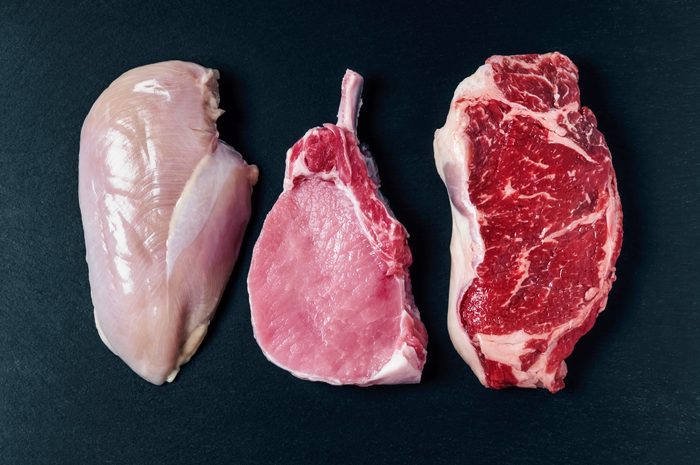
Protein panic
Ever since the news well-nigh the coronavirus infections at the Smithfield pork processing plant in South Dakota broke, people have been concerned well-nigh the safety of the meat they eat. The good news, says Donald Schaffner, PhD, a professor of food microbiology at the School of Environmental and Biological Sciences at Rutgers University, is that at that place is no evidence that y'all tin can contract COVID-xix from eating tainted food.
Meat is every bit condom equally information technology ever was—only that doesn't exactly mean it'due south chance-free. Salmonella, E. coli, and norovirus are only some of the foodborne illness–causing microorganisms found in all kinds of raw meat, from chicken to seafood. Raw or undercooked meat, poultry, and shellfish are among the most probable sources of food poisoning, co-ordinate to the U.South. Centers for Disease Control and Prevention. If you're nervous about grocery stores during COVID-19, detect out some places to buy meat that aren't supermarkets.
ii / x
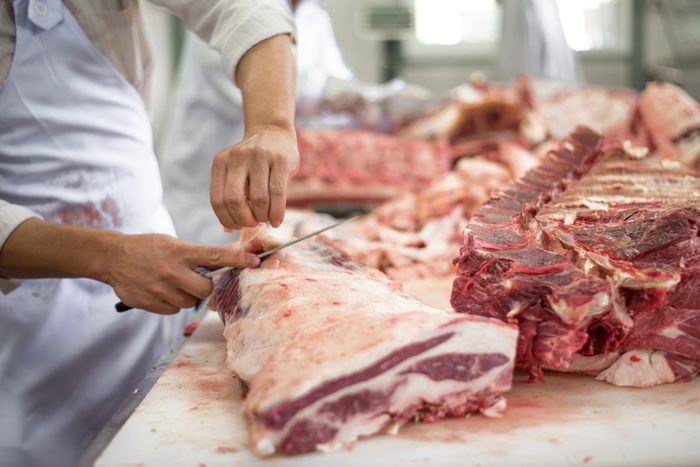
The food (contagion) concatenation
Meat can become tainted at any indicate in the supply concatenation. Some pathogens, such equally Due east. coli and Salmonella, are naturally found in the digestive tracts of many of the animals we swallow. "Contagion tin can happen anywhere along the process from processing and packaging to cooking," says Gary Acuff, a retired professor of nutrient microbiology at Texas A&M Academy who at present runs his own consulting business. "Typically, if animals are salubrious, they don't have leaner in their musculus tissue, merely contaminated surfaces can spread leaner around." That tin happen at the butcher'south, in the store, or in your own home.
3 / 10
An invisible threat
Of class, if y'all could spot tainted meat, it would be easy to avert information technology. Unfortunately, Schaffner says, "Microorganisms are microscopic, and so you tin't see them." In fact, none of your regular senses—olfactory property, gustation, or touch—are able to betoken whether a piece of meat is harboring illness-causing leaner. And studies that have examined organic versus conventionally raised livestock "tend not to prove a difference," says Schaffner. Ditto for other marketing buzzwords like "costless-range" and "grass-fed." This is what grass-fed beef really means.
4 / 10
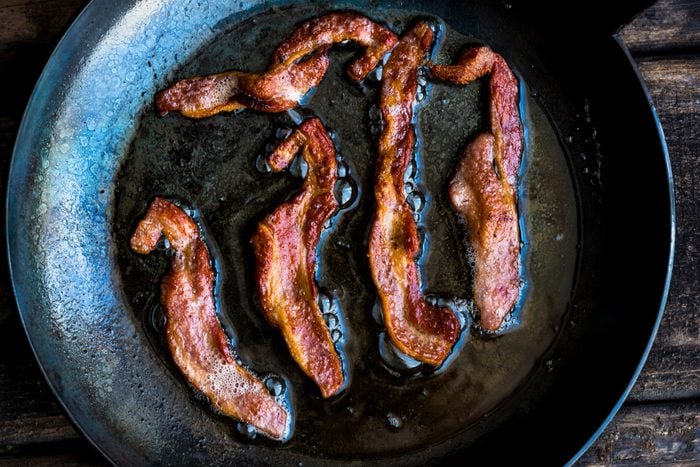
Hot dogs, bacon, and craven nuggets
Still, some kinds and cuts of meat practice tend to pose a greater run a risk than others—and the ones that are considered the safest may surprise yous. Strictly from a food rubber standpoint, experts agree that the lowest chance comes from candy meats, particularly those that are likely to exist cooked over again, such as hot dogs, bacon, and chicken nuggets. (Aye, the same kinds of foods nearly other wellness professionals tell you to avoid.) Processing tends to eliminate any disease-causing pathogens, and cooking these foods according to package directions is an actress precaution. Of course, sometimes processing adds unsavory ingredients.
5 / 10
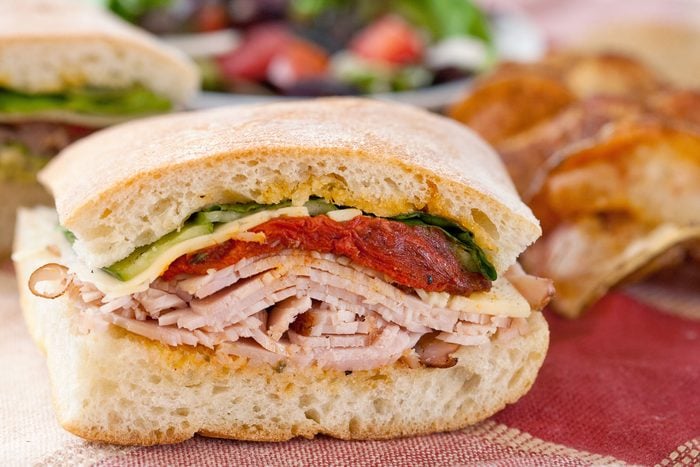
Deli meats
Surprisingly, nutrient safety experts consider cafeteria meats the 2nd safest choice. Again, these meats have been processed, so even without being cooked a 2d time like hot dogs and sausages, they are unlikely to cause any digestive issues. Deli meats tend to get a bad rap considering meaning women, older adults, and individuals with compromised allowed systems are warned to avoid them, since in rare cases they harbor bacteria known every bit Listeria, which is known to cause miscarriages, stillbirths, and other complications in fetuses and newborns. Of class, there are other reasons you lot may want to limit your intake of cafeteria meats, such as nitrates. Make sure you're non making this dangerous error with your meat thermometer.
6 / ten
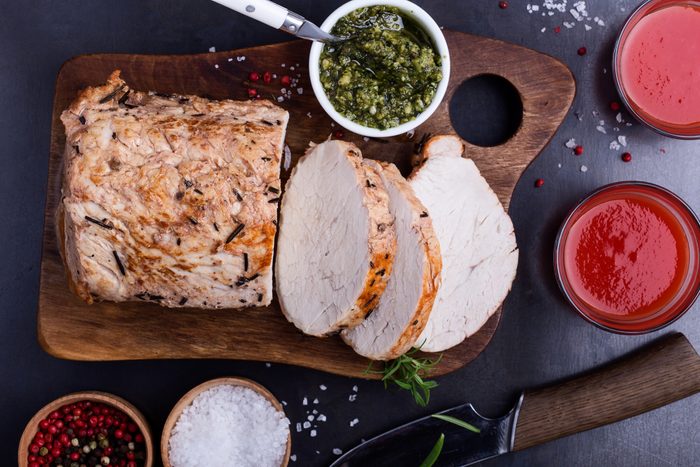
Pork
For a long fourth dimension, pork was considered one of the riskiest meats due to the prevalence of a parasite called Trichinella; consuming raw or undercooked pork that was infected with the parasite causes a disease known equally trichinosis or trichinellosis. But that disease has all but been eradicated, say experts, thanks in big part to a public sensation campaign about the dangers of undercooked pork. An average of only sixteen cases per year were reported between 2011 to 2015, co-ordinate to the CDC, and pork is now considered one of the safest meats to consume—so rubber that in 2011, the USDA guidelines lowered the condom cooking temperature of whole pork cuts to 145 degrees F (ground pork remains 160 degrees F, nonetheless). Find out why the price of meat might be going upwards in restaurants.
7 / 10
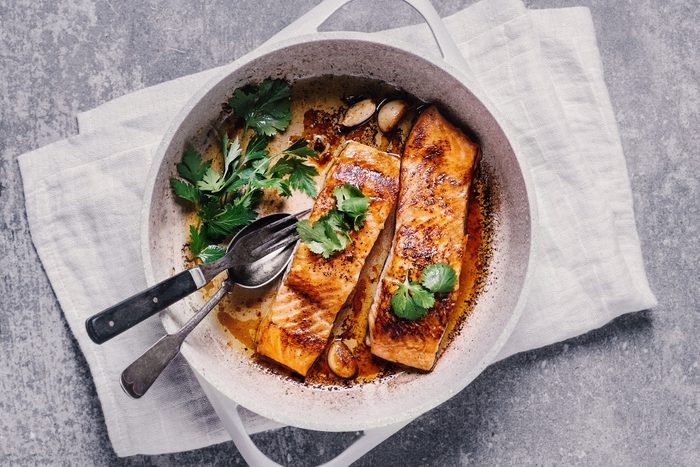
Cooked seafood
In addition to seafood's many other benefits, it'southward rarely the source of foodborne illnesses. "Y'all don't hear about a lot of people getting sick from sushi," says Acuff. That could be because a lot of seafood, including sushi-grade fish, is flash-frozen when information technology's caught, which kills off any bacteria or parasites. Experts say that "chicken of the bounding main" could be even lower risk than bodily craven in this regard. At that place are exceptions, of course. Raw oysters can comprise an infectious bacteria known as Vibrio, and those harvested from contaminated waters may carry norovirus. But in general, cooked seafood is a low-risk source of protein.
viii / 10
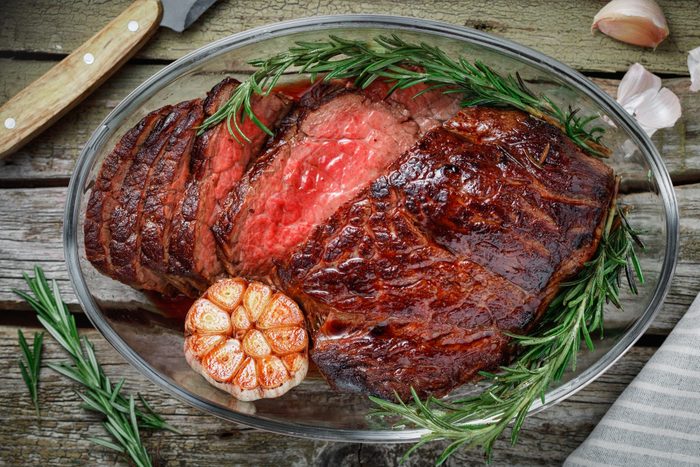
Marinated steaks
One of the primary concerns almost red meat and illness-causing pathogens involves how some packaged steaks are processed. Some companies tenderize their steaks using a mechanical procedure in which metal blades or pins puncture the surface of the meat before it is packaged. Acuff says it is unlikely that the needles will button bacteria into the meat, given that the equipment is sterilized, but any kind of marinade could innovate pathogens into those openings. That's why he tends to be wary of pre-marinated meats and prefers to do information technology himself at dwelling. Be sure to avoid these thirteen grilling mistakes that could make you sick.
9 / 10
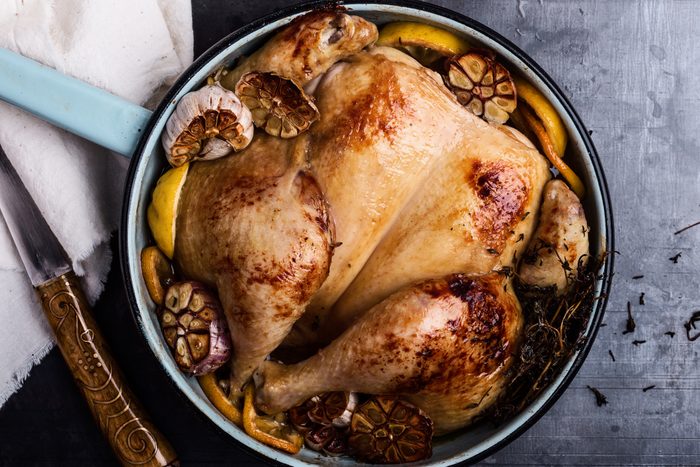
Chicken
Craven tends to be responsible for the most foodborne illnesses, but that is likely considering it's the kind of meat we eat the most. Many cases of food contamination come up from the mishandling of meats and cross-contamination in our ain kitchens. Poultry tends to be especially susceptible to this because it'south often packaged with more liquid that can splash on surfaces. Acuff says this is due to a practice known every bit "chaff freezing," in which just the surface of the poultry is frozen for transport. When it thaws again, liquid pools effectually the meat in the container. You should e'er pat your meat dry out with paper towels and employ a dedicated cutting board for raw meat to avoid transferring bacteria from 1 area of the kitchen to another. In fact, y'all should never launder chicken earlier cooking it.
10 / 10
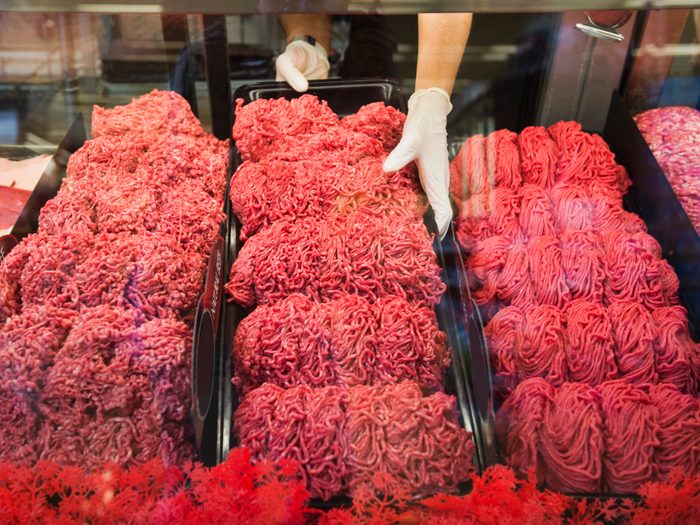
Utilise caution with ground meat
When it comes to food poisoning, the riskiest kind of meat, hands down, is basis meat, experts agree. Whether it'south chicken or turkey, pork, or beef, grinding the meat increases the amount of area that can come into contact with illness-causing pathogens. For that reason, it'south vital to cook anything made from ground meat—hamburgers, meatballs, meatloaf—fully through. That ways ordering your burgers well-washed—advice many grill aficionados may find, um, hard to swallow. Find out the answers to your 11 biggest questions about grilling.
Originally Published: June 18, 2020
Source: https://www.rd.com/list/safest-types-of-meat/

Post a Comment for "Is There Any Chicken or Beef That Is Safe to Eat"